
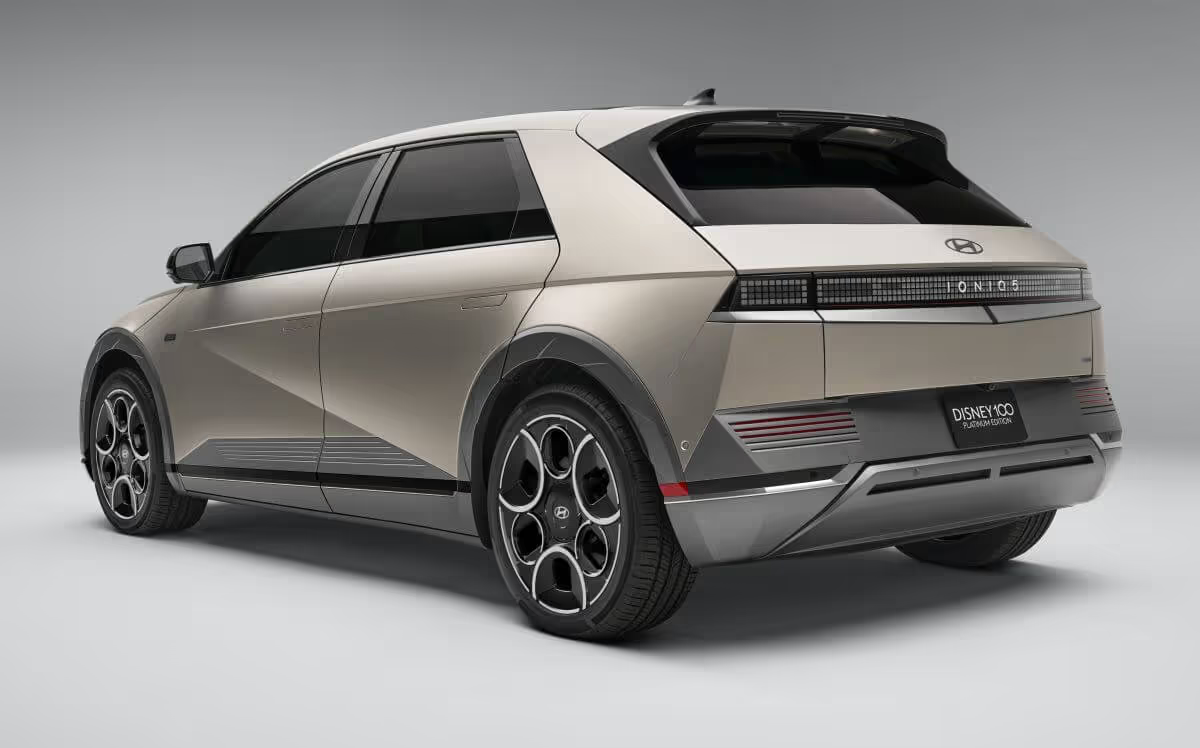
As of 1st July 2026, Hyundai Australia has made a bold and optimistic declaration: the electric vehicle (EV) market Down Under has officially turned a corner. After a period of sluggish growth and buyer hesitation that plagued the EV segment throughout much of 2024 and into 2025, the tide appears to have definitively shifted — and Hyundai is at the forefront of that momentum.
Speaking to media ahead of the mid-year sales reporting period, Hyundai Australia's leadership confirmed that EV uptake has accelerated considerably in the first half of 2026, with the brand's own electric lineup playing a significant role in driving that trend. The company pointed to a combination of government incentives, expanded public charging networks, and growing model availability as the primary catalysts behind the shift in consumer behaviour.
IONIQ 6 and IONIQ 5 Continue to Lead the Charge
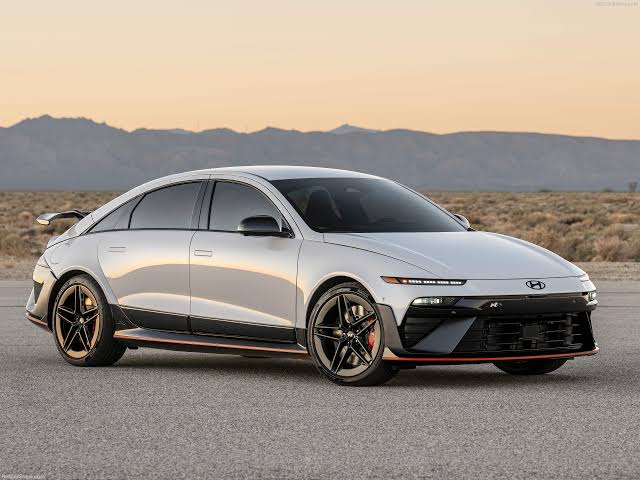
Hyundai's flagship electric sedans and SUVs remain the backbone of its EV success story in Australia. The Hyundai IONIQ 6, the brand's sleek and aerodynamic electric sedan, continues to win over Australian buyers with its exceptional real-world range, fast-charging capability, and driver-focused interior. The IONIQ 6 has consistently ranked among the top-selling EVs in Australia throughout 2025 and into 2026.
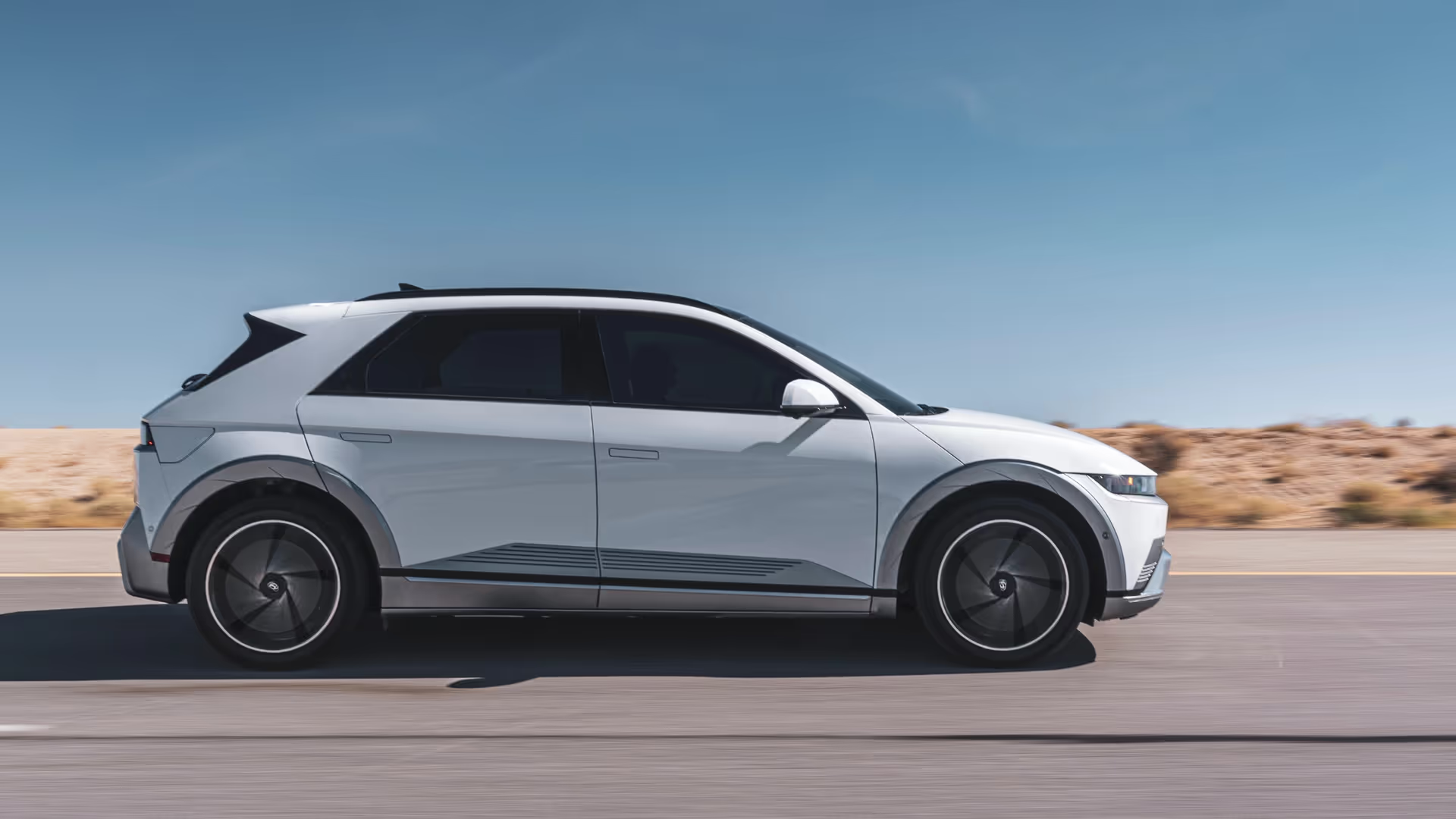
Similarly, the Hyundai IONIQ 5 — the crossover that first put Hyundai's electric ambitions on the global map — remains a firm favourite among Australian families. With its retro-futuristic styling, spacious cabin, and ultra-fast 800V charging architecture, the IONIQ 5 has maintained strong demand well into 2026.
What Turned the Market Around?
Hyundai Australia's confidence is not unfounded. Several structural changes in the Australian automotive landscape have contributed to the EV resurgence:
- New Vehicle Efficiency Standard (NVES): Australia's mandatory vehicle efficiency standards, which came into full effect earlier this decade, have pushed manufacturers to prioritise zero-emission vehicles, resulting in greater availability and more competitive pricing for Australian consumers.
- Expanded Charging Infrastructure: By mid-2026, Australia's national fast-charging network has expanded dramatically, with major highways and regional routes now far better served than just two years ago. Range anxiety — once the single biggest deterrent for EV buyers — has substantially diminished.
- Consumer Confidence and Education: Australians are increasingly well-informed about EVs. First-hand experiences from early adopters, stronger resale value data, and reduced total cost of ownership calculations have all helped normalise EV ownership across demographics.
- Government Incentives: State and federal incentive programmes continue to make EVs financially attractive, with reduced stamp duty, registration benefits, and fringe benefits tax exemptions still applicable for eligible electric vehicles.
IONIQ 9 — The New Flagship Enters the Picture
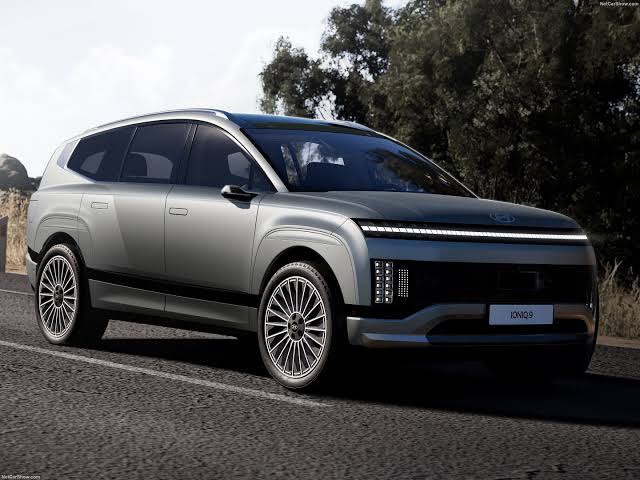
Adding further momentum to Hyundai's Australian EV story is the arrival of the highly anticipated Hyundai IONIQ 9 — the brand's flagship three-row electric SUV. Positioned as a premium family hauler, the IONIQ 9 brings cavernous interior space, cutting-edge technology, and Hyundai's proven E-GMP platform to a segment that has been largely underserved by electric options. Its entry into the Australian market in 2026 is expected to open the door to a whole new group of EV converts — families who previously felt no electric SUV could meet their practical needs.
Hyundai's Broader Electrification Strategy
Hyundai's success in Australia is not accidental. The Korean automotive giant has been executing a carefully orchestrated electrification roadmap, and Australia has become one of its more important growth markets in the Asia-Pacific region. The brand's commitment to offering EVs across multiple price points and body styles — from the urban-friendly IONIQ 5 and sport-oriented IONIQ 6 to the family-focused IONIQ 9 — reflects a deliberate strategy to capture buyers at every stage of the EV consideration journey.
Furthermore, Hyundai's investment in after-sales support, dedicated EV service centres, and battery warranty programmes has addressed many of the ownership anxieties that historically kept Australian buyers on the fence.
Industry Context: Australia's EV Landscape in Mid-2026
Hyundai's optimism is reflected in broader industry data. As of the first half of 2026, EV market share in Australia has crossed meaningful thresholds that analysts had previously projected for late 2027 — a sign that the market matured ahead of schedule. Competing brands including Tesla, BYD, Kia, and Mercedes-Benz have all reported strong EV sales numbers, confirming that the growth is sector-wide rather than brand-specific.
However, Hyundai's positioning remains particularly strong. As one of the few brands with a dedicated EV sub-brand (IONIQ), a homegrown charging ecosystem, and a proven track record across both premium and mainstream segments, it is uniquely placed to capitalise on Australia's EV momentum.
BakuWheels Perspective
From our vantage point at BakuWheels, the Australian EV story carries important lessons for other markets still in the early stages of electrification. Hyundai's success down under underscores a fundamental truth: when the right vehicles meet the right infrastructure and the right policy environment, consumer adoption follows naturally. The IONIQ lineup — spanning the IONIQ 5, IONIQ 6, and now the IONIQ 9 — represents some of the most compelling EVs available globally, and their resonance with Australian buyers is a testament to the quality and vision behind Hyundai's electric strategy.
As markets across the world, including Azerbaijan, continue to evolve toward electrification, the Australian turnaround serves as an encouraging precedent. The corner has been turned — and Hyundai is leading the way.