
Introduction: A New Era for McLaren
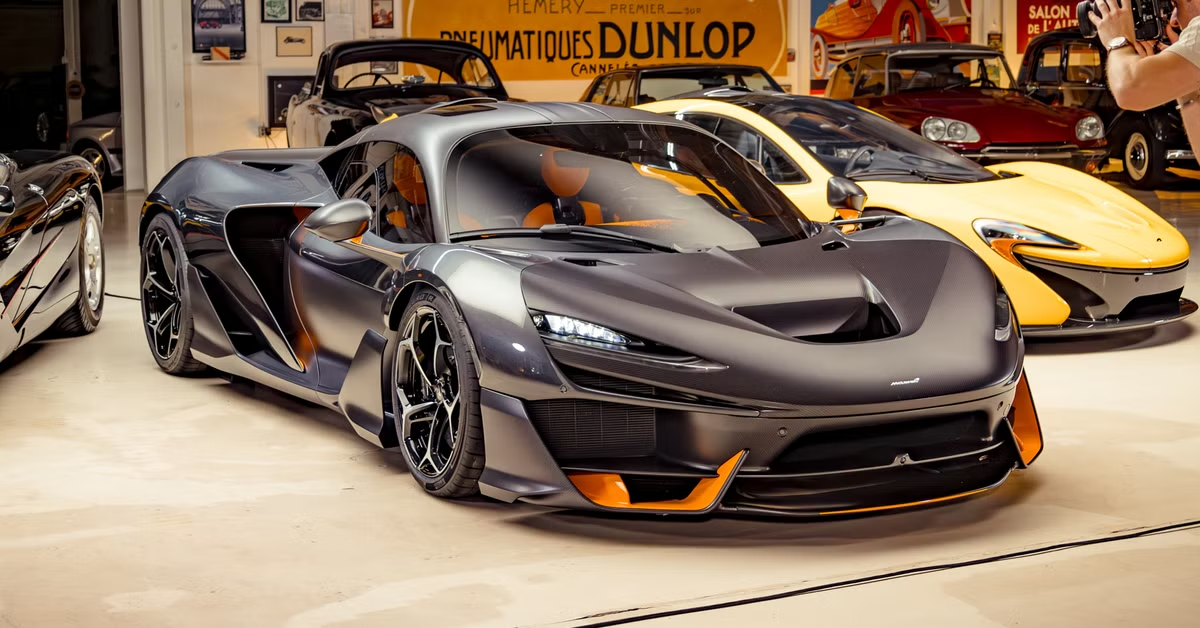
When McLaren introduced the P1 back in 2013, it redefined what a road-legal hypercar could be. Over a decade later, the British marque has done it again — and this time, the stakes are even higher. Ladies and gentlemen, meet the McLaren W1 2026, a machine that McLaren calls the most technically advanced road car it has ever produced. As automotive journalists at BakuWheels, we had the privilege of attending the global launch event to bring you this comprehensive first-look review.

Design: Aerodynamics as Art
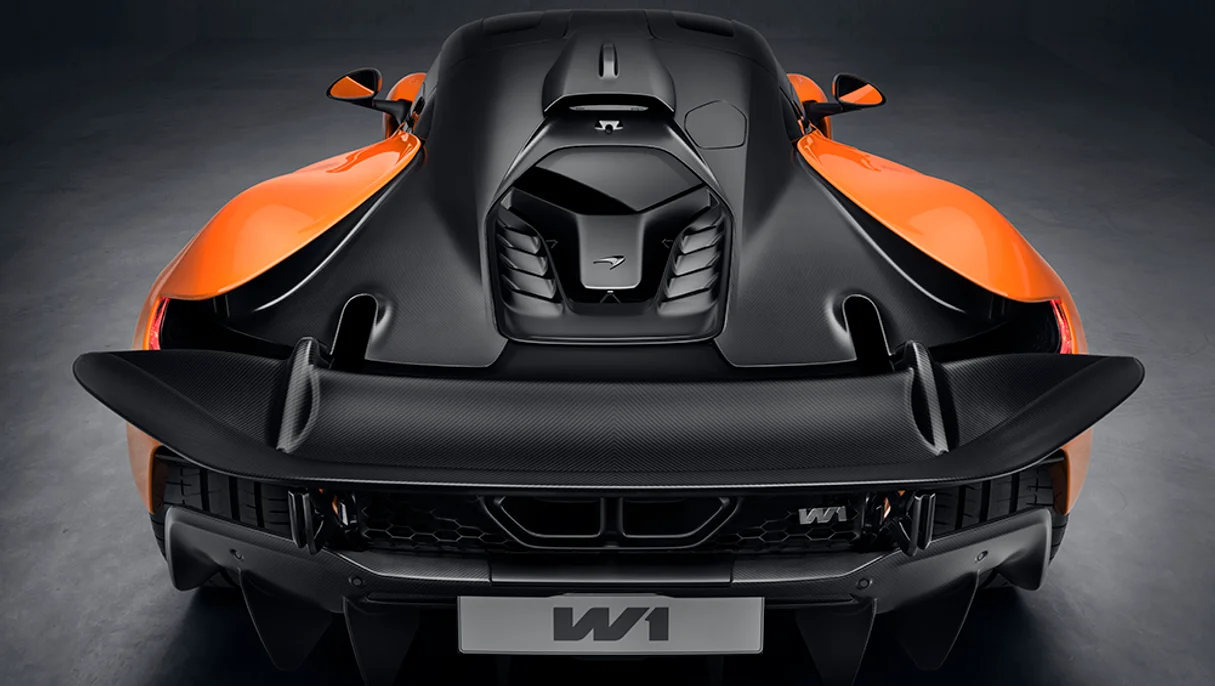
The McLaren W1 2026 does not follow conventional design language — it rewrites it. Every surface, every duct, every curve on this car has been sculpted with one singular obsession: aerodynamic efficiency. The W1 features an active aerodynamics system McLaren calls AERO T (Active Aerodynamic Rear Tail), which deploys a dramatic rear wing capable of generating up to 1,000 kg of downforce at high speeds — more than any road-legal McLaren before it.
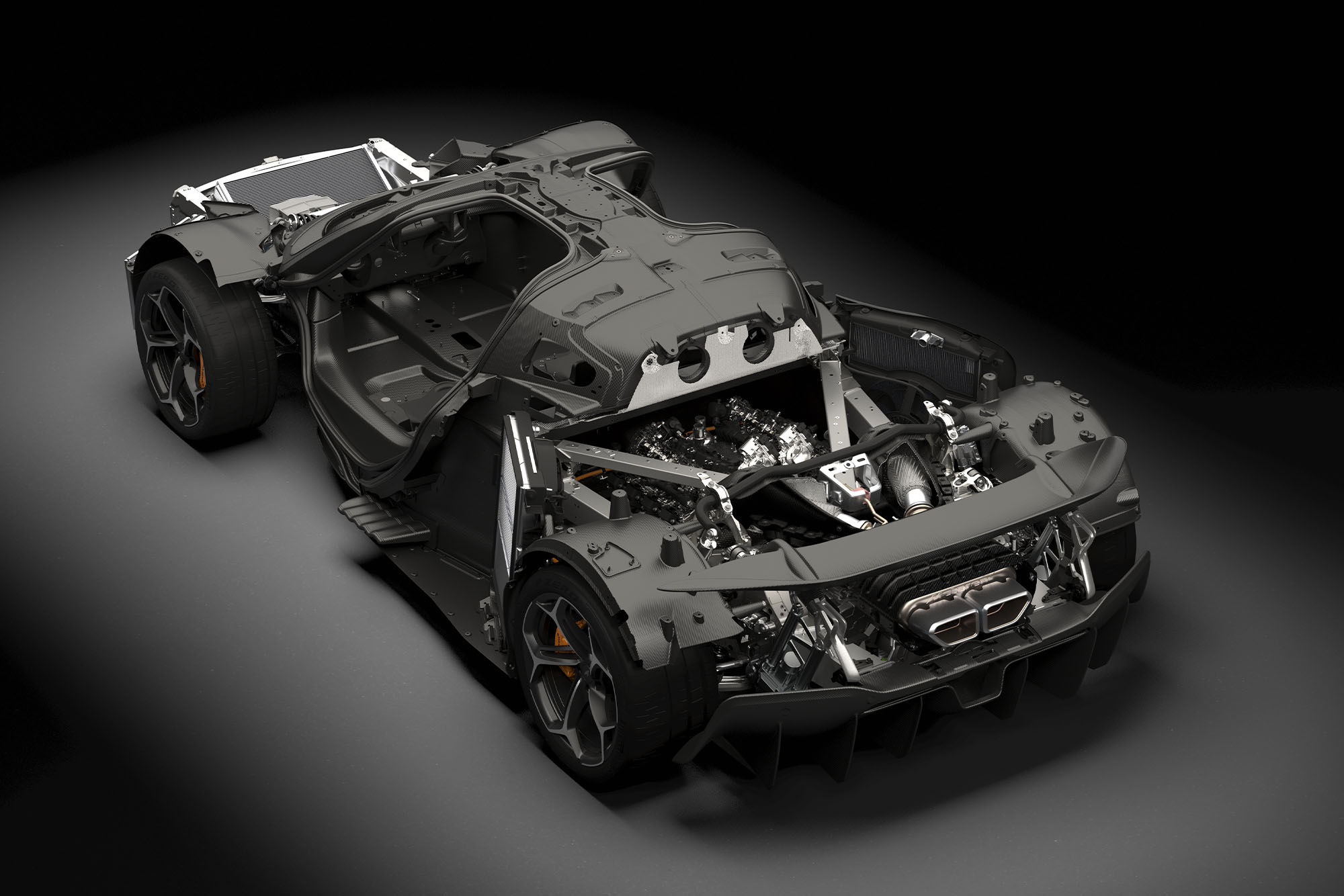
The body is constructed entirely from carbon fibre, featuring a new monocoque chassis called the McLaren Carbon Lightweight Architecture (MCLA). Up front, you are greeted by a wide, low-slung nose with massive front splitters that channel air both over and under the car with surgical precision. The dihedral doors — a McLaren signature — sweep upward and forward to reveal an interior that is as purposeful as it is exquisite.

Powertrain: The Heart of a Monster
At the core of the McLaren W1 lies a masterpiece of engineering. McLaren has fitted the W1 with an all-new, twin-turbocharged 4.0-litre V8 internal combustion engine — codenamed MHP-88 — that produces 928 bhp on its own. This engine is then paired with a highly advanced electric motor system that contributes an additional 347 bhp, bringing the combined system output to a staggering 1,275 bhp (950 kW).
The electric motor draws power from a lightweight lithium-ion battery pack mounted low in the chassis for optimal weight distribution. McLaren has been exceptionally careful to keep the overall weight of the W1 as low as possible — the car tips the scales at approximately 1,399 kg dry, an extraordinary achievement for a car with this level of performance and hybrid complexity.
- Engine: Twin-turbocharged 4.0L V8 (MHP-88)
- ICE Power: 928 bhp
- Electric Motor Power: 347 bhp
- Combined Output: 1,275 bhp / 950 kW
- Torque: Over 1,340 Nm (combined)
- Dry Weight: ~1,399 kg
- Power-to-Weight Ratio: ~911 bhp per tonne
Performance: Numbers That Defy Reality
The performance figures for the McLaren W1 2026 are genuinely jaw-dropping. McLaren claims the W1 will sprint from 0 to 100 km/h in just 2.7 seconds, reach 200 km/h in under 5.8 seconds, and hit a top speed of 350 km/h (217 mph). These numbers put it firmly in the conversation alongside the likes of the Bugatti Chiron Super Sport and the Koenigsegg Jesko — both considerably heavier machines.
The seven-speed dual-clutch transmission (SSG gearbox) has been completely redesigned to handle the immense torque output and deliver lightning-fast gear changes. The all-wheel drive system — featuring a front-axle electric drive and rear-axle mechanical drive — ensures that power is deployed with maximum efficiency regardless of road conditions.
Chassis and Dynamics: Track Precision on Public Roads
McLaren's engineers have long been obsessed with driving dynamics, and the W1 is the ultimate expression of that philosophy. The car rides on bespoke Pirelli P Zero Trofeo R tyres developed specifically for the W1 in collaboration with Pirelli. The adaptive suspension system features hydraulically interconnected dampers that can read the road surface and adjust in milliseconds.
The W1 also features four-wheel steering, allowing the rear wheels to pivot by up to 2.7 degrees to enhance both low-speed agility and high-speed stability. Braking is handled by a combination of carbon-ceramic discs and the electric motor's regenerative braking system — together delivering stopping power that is nothing short of astonishing.
Interior: Driver-Focused Cockpit
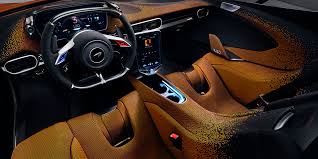
Step inside the McLaren W1 and you are immediately enveloped in a space that is unambiguously focused on the driver. The cockpit is narrow, intimate, and trimmed in a combination of lightweight Alcantara and carbon fibre surfaces. McLaren has deliberately kept digital displays minimal — a central 8-inch infotainment touchscreen flanked by two smaller driver-focused displays showing powertrain and performance data.
The steering wheel is a masterpiece in itself, featuring integrated controls for the drive modes, AERO T system, and launch control. Seating position is low and reclined, placing the driver in a near-supine position — much like a racing car. The seats themselves are fixed carbon fibre shells with adjustable pedals to accommodate drivers of different sizes.
Drive Modes and Technology
The McLaren W1 offers multiple driving modes including Comfort, Sport, Track, and Race. In EV-only mode, the car can travel short distances on pure electric power — ideal for urban environments where noise restrictions apply. The Race mode unleashes the full combined output of the powertrain and activates the most aggressive aerodynamic settings, transforming the W1 into something that feels genuinely closer to an LMP1 race car than a road vehicle.
McLaren has also incorporated a sophisticated Vehicle Dynamics Control (VDC) system that continuously monitors yaw rate, lateral acceleration, wheel speeds, and steering input to keep the W1 stable even when driven at the very limit.
Pricing and Exclusivity
The McLaren W1 2026 is not a car for the masses — nor was it ever intended to be. McLaren has confirmed that production will be strictly limited to 399 units worldwide. The starting price is reported to be approximately £2.1 million (approximately $2.6 million USD), though options and bespoke configurations through McLaren Special Operations (MSO) can push the final price considerably higher. Unsurprisingly, all 399 units have already been allocated to customers, the majority of whom are believed to be existing McLaren collectors.
BakuWheels Verdict
The McLaren W1 2026 is more than just a new hypercar — it is a landmark moment in automotive history. It represents McLaren's boldest statement yet: that the future of extreme performance lies in the intelligent marriage of internal combustion and electrification, not the abandonment of one for the other. From its astonishing powerplant to its aerodynamic mastery, from its razor-sharp dynamics to its purposeful, driver-centric interior — the W1 excels in every single dimension.
As your trusted automotive voice from Baku, BakuWheels can confidently say: the McLaren W1 is not just the best car McLaren has ever made — it is one of the most extraordinary road cars ever created by human hands. The legend of the P1 has a worthy successor at last.