

Adler Diplomat (1934–1938)
The Adler Diplomat was the Frankfurt manufacturer’s flagship prestige limousine — a large, refined, rear-wheel drive model powered by a 2.9-litre inline six-cylinder engine producing 60 horsepower. Built at a time when Adler was also pioneering front-wheel drive technology in its smaller models, the Diplomat represented the opposite pole of the range: a conventional but beautifully crafted luxury car intended for businessmen, senior officials, and the prosperous professional class of 1930s Germany.
Overview
The Adler Diplomat occupied the apex of Adler’s model hierarchy in the mid-1930s, sitting above the Favorit and the innovative Trumpf models to serve buyers who required genuine luxury transport. Where Adler’s smaller models were celebrated for their engineering innovation — particularly the front-wheel drive layout of the Trumpf and Trumpf Junior — the Diplomat took a more traditional approach, using a conventional rear-wheel drive layout, a long wheelbase, and a six-cylinder engine to deliver the refinement and presence expected of a pre-war limousine.
The 2.9-litre inline six produced 60 hp at 3,600 rpm, figures that placed it competitively against the Mercedes-Benz 290 and the BMW 326 in the German luxury market. The engine was smooth and relatively quiet for its era, mounted well forward in the long bonnet that was de rigueur for prestige cars of the period. A four-speed manual gearbox with synchromesh on the upper ratios provided reasonable ease of driving for chauffeur-driven customers and owner-drivers alike. Top speed was approximately 120 km/h — adequate for Autobahn cruising in the years before the war.
The Diplomat’s body was available in several configurations. The primary production body was a six-light limousine with a formal roofline, leather upholstery, and wood veneer interior trim. A sport variant with lower body lines and enhanced engine output was produced in small numbers from 1935, and specialist coachbuilders offered cabriolet bodies on the Diplomat chassis for customers seeking an open-air specification. The cabriolet examples are the rarest and most sought-after surviving Diplomats today.
Production continued until 1938, when the model was discontinued as Adler rationalised its range in the final years before the outbreak of war. The Diplomat was never produced in large numbers; the combination of its premium price, four-year production run, and the attrition of the war years means that survivors are genuinely rare. European specialist auctions occasionally present Diplomats, typically fetching prices of €25,000–€60,000 for standard saloons and significantly more for the rare cabriolet examples.
For the collector, the Diplomat offers something the Trumpf and Trumpf Junior do not: the imposing presence and formal character of a genuine pre-war luxury limousine, combined with Adler’s reputation for quality construction. The six-cylinder engine is smooth and characterful, the body proportions are elegant by the standards of any era, and the Diplomat’s rarity means that no two collector events will feature competing examples. It is a car for the serious pre-war German collector rather than the casual enthusiast.
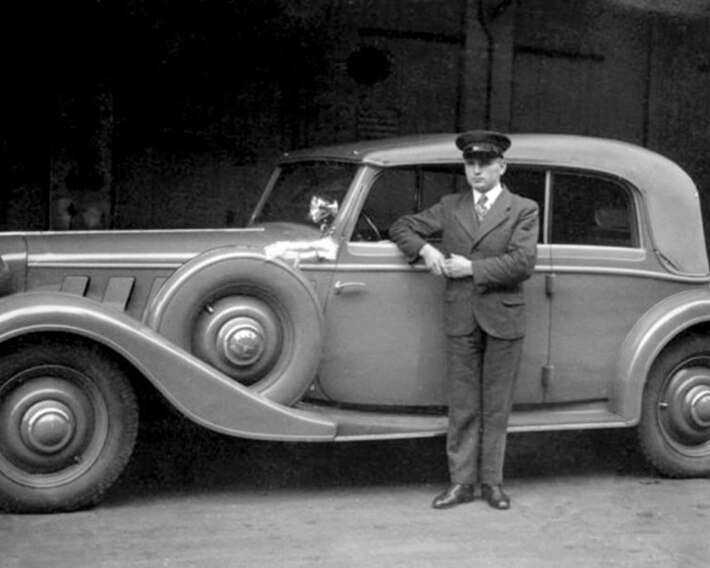
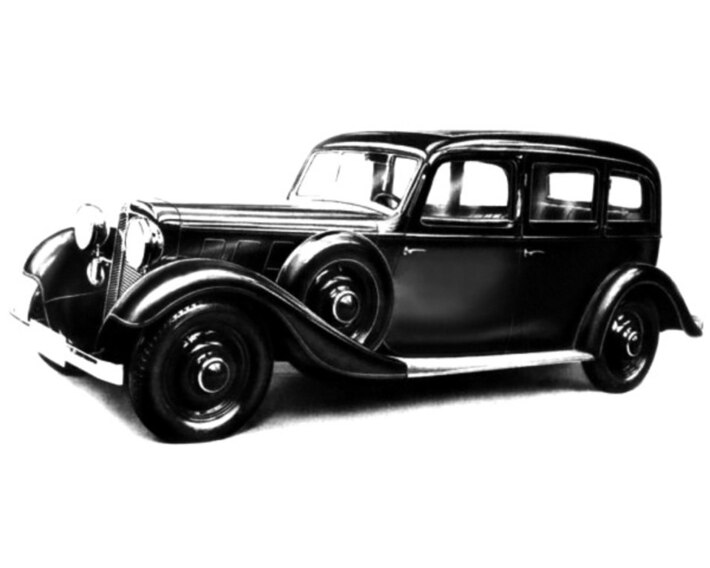
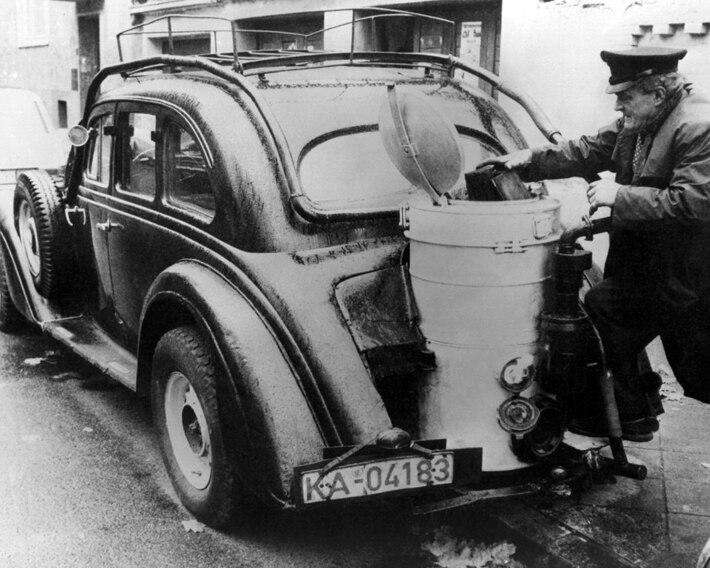
Adler Diplomat in Pictures
The Diplomat’s long bonnet, formal six-light body, and sweeping front fenders embody the aesthetic of German luxury car design in the mid-1930s — a period when German manufacturers were competing seriously with British and American prestige cars for the first time.


Key Specifications
- Engine: 2.9-litre inline 6-cylinder, overhead valves, single carburettor; 60 hp at 3,600 rpm; smooth, low-revving character appropriate for limousine service. Cast iron block and head. Engine mounted longitudinally, driving the rear wheels through a four-speed gearbox.
- Drive layout: Conventional rear-wheel drive; open propshaft to a live rear axle. A deliberate choice to differentiate the Diplomat’s character from the FWD models lower in the range, and to provide the relaxed torque delivery expected of a luxury limousine.
- Transmission: 4-speed manual gearbox; synchromesh on 2nd, 3rd, and 4th gears. Floor-mounted gear lever. Final drive ratio set for relaxed high-speed cruising rather than maximum acceleration.
- Chassis: Separate steel ladder frame with independent front suspension and semi-elliptic leaf springs at the rear. Long wheelbase providing excellent rear passenger space. Wheelbase approximately 3,050 mm; overall length approximately 4,700 mm.
- Body styles: Six-light limousine (primary production); Sport two-door (rare, lower body); Cabriolet (coachbuilt, rarest). All saloon bodies feature full leather interior, wood veneer dashboard and door cappings, and deep-pile carpeting as standard specification.
- Brakes: Hydraulic drum brakes on all four wheels; servo-assisted on later examples. Mechanically operated handbrake. Larger drums than the smaller Adler models, providing adequate stopping power for the limousine’s greater weight.
- Performance: Top speed approximately 115–120 km/h; 0–100 km/h in approximately 22–25 seconds. Fuel consumption approximately 13–15 litres per 100 km at sustained speed. Performance figures appropriate for a formal limousine rather than a sporting car.
- Weight: Approximately 1,500–1,600 kg ready to drive in standard limousine specification; the formal body adds significant mass compared to the Favorit and Trumpf models.
- Production years: 1934–1938; relatively short four-year production run. Total production was modest, contributing to today’s rarity in the collector market.
Variant Comparison
| Variant | Engine | Power | Gearbox | Best For |
|---|---|---|---|---|
| Diplomat Standard (1934–1938) | 2.9L inline 6-cylinder, single carburettor, rear-wheel drive | 60 hp at 3,600 rpm | 4-speed manual, synchromesh on upper gears | The mainstream Diplomat specification; elegant six-light limousine body; full leather interior; standard specification for business and official use; the most common surviving variant and the correct choice for collectors seeking a representative example of Adler's pre-war luxury offering |
| Diplomat Sport (1935–1937, rare) | 2.9L inline 6-cylinder, tuned carburettor, rear-wheel drive | 65 hp at 4,000 rpm | 4-speed manual close-ratio | The sporting variant with higher-compression engine, lower body, and two-tone paint options; produced in very small numbers and highly sought by collectors; a prestige acquisition for serious Adler collectors; significantly rarer than the standard Diplomat and commands a premium at European auctions |
| Diplomat Cabriolet (1935–1938) | 2.9L inline 6-cylinder, rear-wheel drive | 60 hp | 4-speed manual | The open-bodied version of the Diplomat; coachbuilt by specialist German bodymakers; four-seat cabriolet with elegant hood lines; the most visually dramatic Diplomat body style and the rarest in the surviving population; values significantly above the saloon at European specialist auctions |
What Makes the Diplomat Stand Out
In Adler’s 1930s range, the Diplomat was the prestige model that demonstrated the company could compete at the top end of the German market while simultaneously pioneering FWD technology in its volume models.
- Adler’s prestige flagship: The Diplomat was the car Adler used to establish its credentials as a full-spectrum manufacturer capable of competing with Mercedes-Benz and BMW at the luxury end of the market. Its presence in the range gave dealers and customers confidence in the brand’s engineering capabilities across all price points.
- Elegant body proportions: The long bonnet, formal six-light body, and sweeping front fenders of the Diplomat represent one of the most elegant expressions of 1930s German luxury car design. Contemporary design criticism placed the Diplomat’s styling among the best of the period’s German large cars.
- Smooth six-cylinder character: The 2.9-litre inline six provides the relaxed, vibration-free character that buyers of formal limousines expected. The engine’s torque delivery at low rpm makes the Diplomat a more pleasant car to drive gently — as it was intended to be used — than the more highly strung sporting models from other German manufacturers.
- Exceptional rarity in the collector market: Far fewer Diplomats survive than any of Adler’s smaller pre-war models. The combination of a modest production run, four years of manufacture, and the attrition of the war and its aftermath means that a Diplomat at a European classic car show is a genuine event. Rarity drives collector interest and value appreciation.
- High-quality interior appointments: The Diplomat’s standard specification included full leather upholstery, wood veneer trim, deep-pile carpeting, and the comprehensive instrumentation expected of a prestige car. The quality of surviving interiors speaks to the care Adler’s Frankfurt craftsmen invested in the model.
- Contextual significance within Adler’s story: The Diplomat represents one pole of Adler’s extraordinary 1930s engineering range: while the Trumpf Junior was revolutionising the small car market with FWD technology, the Diplomat was demonstrating that the same company could build a competitive traditional luxury limousine. This duality makes the Diplomat an important piece of Adler’s history.
Maintenance & Repairability in Azerbaijan
Maintaining an Adler Diplomat in Azerbaijan is a serious undertaking that requires committed relationships with European classic car specialists and realistic expectations about parts lead times and costs. The Diplomat’s relative rarity compared to more common pre-war types makes specialist support even more important than for the Trumpf Junior.
- Inline six-cylinder engine service: The 2.9-litre six requires conventional pre-war service: oil changes every 2,000–3,000 km with SAE 30 or 40 classic car oil, carburettor cleaning and adjustment, ignition timing and contact breaker inspection every 5,000 km, valve clearance checking every 10,000 km. The engine’s relative simplicity is an advantage; any experienced classic car mechanic can perform basic service.
- Parts sourcing: Specialist pre-war German car dealers in Germany, Austria, and Switzerland are the primary sources for Diplomat parts. The Adler-Veteranen-Club maintains a network of owners and specialists with parts holdings. Shipping from Germany to Azerbaijan takes approximately 1–2 weeks; major structural or mechanical components may require fabrication to original drawings.
- Lubrication schedule: Pre-war cars of the Diplomat’s era have numerous grease nipples requiring regular attention: front suspension kingpins, steering linkage joints, propshaft universal joints, and rear spring shackles should be greased every 1,000–2,000 km. A missed lubrication schedule causes accelerated wear in all these areas; establish a routine at the start of ownership.
- Bodywork conservation: The Diplomat’s large steel body requires careful corrosion management. All inner body sections — sills, floor, inner wing panels, and the base of the pillars — should be treated with wax-injection protection annually. Any paint damage should be addressed promptly to prevent rust spreading under the finish. A dry garage in Baku’s climate is essential for long-term preservation.
- Hydraulic brake system: The large-drum hydraulic brakes require complete system inspection annually: master cylinder seals, all four wheel cylinders, brake lines, and brake fluid. Brake fluid in a car stored in Baku’s humid summers absorbs moisture over time, reducing the boiling point; annual fluid replacement is recommended regardless of mileage.
- Leather and wood interior: The Diplomat’s leather upholstery requires regular conditioning with a quality leather preservative; dry Baku summers and the car’s intermittent use can cause hide to dry and crack without attention. Wood veneer trim should be treated with furniture wax annually and protected from direct sunlight during storage.
- Tyre sourcing: The Diplomat uses large pre-war tyre sizes that are not stocked by modern tyre retailers. European specialist suppliers (Blockley Tyres, Dunlop Classic, Coker Tire) manufacture period-correct crossply tyres in the correct sizes; ordering should be planned 4–6 weeks in advance to allow for international shipping.
Adler Diplomat vs. Contemporaries
| Model | Core Strength | Main Compromise (Collector Context) |
|---|---|---|
| Adler Diplomat (1934–1938) | Adler's prestigious RWD 6-cylinder luxury model; 2.9L straight-six; 60 hp; elegant limousine body; built to high standards by Frankfurt craftsmen; genuine luxury car of the era at a competitive price; historically important as Adler's prestige model concurrent with their FWD innovations | Conventional RWD at a time when Adler was pioneering FWD in its smaller models; less powerful than some direct competitors; relatively limited numbers surviving; parts support requires German specialist contacts |
| Mercedes-Benz 290 (1933–1937) | Mercedes prestige and badge cachet; 2.9L engine (comparable displacement); more powerful factory tuning options; better international parts support network; the benchmark German luxury car of the period; strong surviving population | Significantly more expensive than the Diplomat new; heavier; Mercedes badge commands premium at auction making acquisition more costly; less accessible for new collectors entering the pre-war German luxury segment |
| BMW 326 (1936–1941) | BMW's elegant 2.0L 6-cylinder; beautiful Ihle-designed body; BMW badge with strong collector following; well-supported by the BMW club network; good parts availability through specialist suppliers; lighter and more nimble than the Diplomat | Smaller engine (2.0L vs 2.9L); less imposing presence than the full-size Diplomat limousine; different market segment — the BMW 326 was a sporting touring car rather than a formal luxury vehicle |
| Horch 830 (1933–1940) | Auto Union's prestige V8 marque; sophisticated chassis engineering; prestigious Zwickau origins; rarer and more impressive than the Diplomat; V8 engine characteristic; strong collector following among Auto Union enthusiasts | Significantly more expensive than the Diplomat at the time of production and today; more complex V8 engine; rarer parts support; acquisition costs much higher at specialist auction |
| Wanderer W23 (1938–1941) | Auto Union's mid-range marque; 2.6L 6-cylinder; elegant body styling by Pinin Farina; well-regarded engineering; Auto Union heritage; strong visual appeal for collectors | Produced for a shorter period than the Diplomat; late-war timing makes survivors more vulnerable to wartime damage history; parts support requires specialist sourcing similar to the Diplomat |
Cost-of-Ownership Calculator (Azerbaijan)
This calculator estimates annual running costs for an Adler Diplomat used as a collector car with low annual mileage. Defaults reflect the typical pattern for a pre-war large car in collector use: occasional show drives, careful storage, and European parts sourcing for maintenance.
- Estimated annual fuel use: 120 litres
- Estimated annual fuel cost: $78
- Total annual ownership estimate: $5878
- Average monthly ownership estimate: $490
Used Buying Checklist
Purchasing an Adler Diplomat requires thorough inspection and specialist knowledge. The Diplomat’s rarity means that any example on the market deserves careful scrutiny.
- Engine condition and oil pressure: Start the engine from cold and allow it to warm fully; check for unusual noises from the top end (worn camshaft or tappets) and bottom end (worn main bearings). Measure oil pressure with a gauge at idle and at 2,000 rpm; a rebuild on the Diplomat’s six-cylinder is a significant cost that must be factored into the purchase price.
- Chassis corrosion: The Diplomat’s separate ladder frame should be inspected at all outrigger and crossmember joints. Probe the rails for corrosion at body mounting points; structural rust in the frame is a disqualifying defect unless a complete chassis rebuild is planned and budgeted. Surface rust on the frame is manageable; structural perforation is not.
- Body panel condition: Inspect all door bottoms, the boot floor, inner wing panels, and the base of all pillars. Filler concealing corrosion is common on pre-war cars that have been cosmetically restored; magnetic testing reveals steel versus filler composition. Original panel condition is significantly preferable to heavy filler repairs.
- Interior integrity: The leather upholstery and wood veneer of a Diplomat in good original condition adds significantly to value. Restored interiors should use correct period materials and stitching patterns; incorrect modern leather or vinyl upholstery reduces value and requires replacement to restore authenticity.
- Gearbox and transmission: Test all four gears for smooth engagement; synchromesh baulk rings in the upper gears wear over time. Propshaft universal joints should be checked for play; worn UJs cause vibration at speed and eventually fail. Listen for differential noise under load; these items are expensive to rebuild due to parts rarity.
- Provenance documentation: Request all available historical documentation: original German Fahrzeugbrief if available, any restoration invoices, ownership history, and Adler-Veteranen-Club registration if applicable. A well-documented Diplomat commands a premium and provides assurance of authenticity that an undocumented car cannot offer.
Adler Diplomat FAQ
How does the Diplomat compare to the Mercedes-Benz 290 of the same era?
The Diplomat and Mercedes-Benz 290 were direct competitors in the German luxury market. The Mercedes had greater prestige cachet and a marginally more powerful engine in tuned specifications, but the Diplomat was often priced more competitively and offered comparable interior quality. Today, the Mercedes 290 is more sought-after due to the Mercedes brand name, but the Diplomat offers equivalent engineering quality and greater rarity for the serious collector who values historical significance over marque prestige alone.
Why did Adler choose rear-wheel drive for the Diplomat when the Trumpf used FWD?
Adler’s decision to use conventional rear-wheel drive for the Diplomat reflected the practical and market realities of the mid-1930s. Front-wheel drive was still a novelty requiring consumer education when applied to smaller, more affordable cars; buyers of large luxury limousines expected conventional engineering. The RWD layout also allowed the Diplomat to use a live rear axle with differential, providing the smooth, low-vibration drive shaft feel that formal limousine buyers expected. The FWD system of the Trumpf was optimised for space efficiency in a small car — less important in a full-size limousine where space was not constrained.
How many Adler Diplomats survive today?
Precise numbers are unknown, but the surviving population is small. The Adler-Veteranen-Club in Germany maintains records of known survivors; estimates suggest fewer than 50 complete or restorable Diplomats exist worldwide, with perhaps 20–30 in running condition. Cabriolet examples are extremely rare — perhaps fewer than five complete surviving examples are known. Any Diplomat that comes to market is a significant event in the pre-war German collector community.
Is the Diplomat suitable for regular use in Azerbaijan?
The Diplomat is strictly a dry-weather, occasional-use collector car in Azerbaijan. Its pre-war mechanical systems, very high fuel consumption for a modern Baku commute, and the challenges of finding qualified roadside assistance make it unsuitable for regular or year-round use. It is best used for classic car events, dry-day drives in favourable weather, and occasional display at collector gatherings. Plan all significant journeys with breakdown assistance contacts prepared in advance.
Should You Buy an Adler Diplomat?
The Adler Diplomat is not a car for the casual classic car enthusiast — it is a serious acquisition for the committed collector with both the financial resources and the patience to maintain a genuinely rare pre-war German luxury limousine. For that collector, the Diplomat offers something that no other car can provide: the specific character and historical significance of Adler’s 1930s prestige model, combined with the inherent rarity that comes from a modest production run and eight decades of attrition. Values have risen consistently as the pre-war German luxury market attracts increasing international attention.
The practical requirements are demanding: European parts sourcing, specialist mechanical knowledge, careful storage, and committed conservation of the interior and bodywork. Ownership costs will be significant even at low annual mileage, primarily driven by the service budget and insurance appropriate for a rare pre-war German luxury car. If you are considering a Diplomat purchase from Azerbaijan, engage a specialist pre-war German car appraiser, ideally with Adler experience, and request a full inspection before committing to any acquisition.
BakuWheels uses cookies to improve your experience, analyse site traffic, and personalise content. By clicking Accept All, you consent to our use of cookies. Learn more in our Cookie Policy.